
Planned and placed in-house
Hammons Family Dental places and restores dental implants at its Georgetown office, 1502 Blue Ridge Drive, Suite 101 — four minutes from Sun City and just off the I-35 corridor. Dr. Travis Hammons, DDS plans every case on in-office 3D CBCT imaging and handles it from consultation through the final crown, so you are not referred out mid-treatment. Single-tooth implants, implant-supported bridges, and full-arch All-on-X restorations are all available.
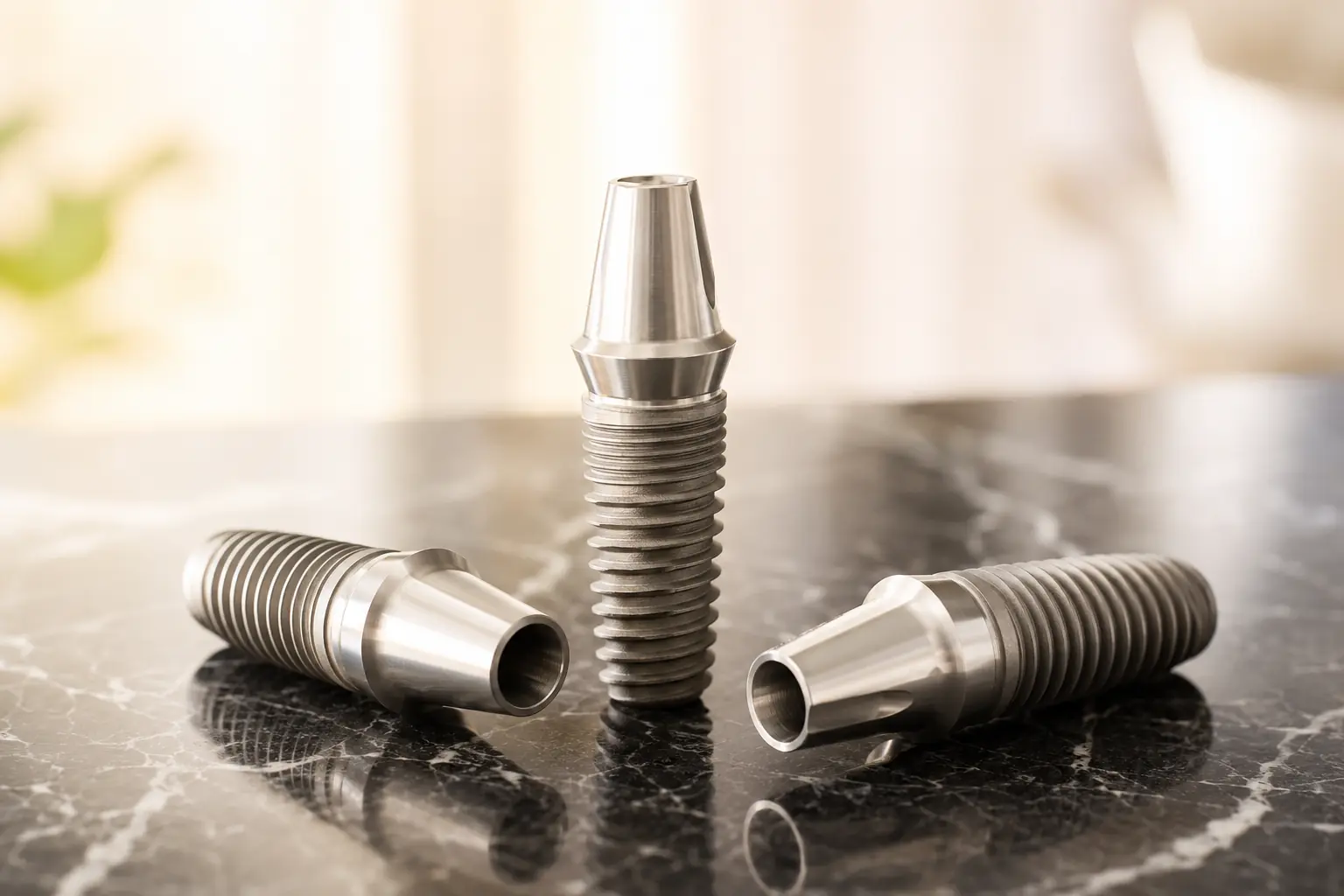
A dental implant replaces the root of a missing tooth with a titanium post that fuses to the jawbone, then supports a crown, bridge, or full arch on top. Unlike a bridge, it doesn't require reducing the healthy teeth on either side — and unlike a removable denture, it preserves the bone underneath instead of letting it recede.
Your options
Which approach fits depends on how many teeth are missing, how much bone is available, and what you want the result to do. All three are planned and placed at our Georgetown office.
One post, one custom crown. The neighboring teeth are left completely untouched, which is the main clinical argument for an implant over a traditional three-unit bridge. Cleaned and flossed like a natural tooth.
One missing tooth
Two or more implants carry a fixed bridge across a gap, replacing three or four teeth without needing an implant for each one. A common answer for a run of missing teeth in the back of the mouth.
Several missing teeth
A fixed, non-removable full arch of teeth supported by four or more implants. For patients with failing teeth or an existing denture that moves, slips, or has never really fit.
A full upper or lower arch
How the options compare
An honest comparison, including where an implant is not the right answer. We'll walk through this with you at the consultation using your actual imaging.
| Dental implant | Traditional bridge | Removable denture | |
|---|---|---|---|
| Neighboring teeth | Untouched | Must be reduced and crowned | Untouched, but may be clasped |
| Effect on jawbone | Stimulates and preserves bone | Bone under the gap continues to resorb | Bone continues to resorb; fit changes over time |
| Feels and functions like | A natural tooth | Close to a natural tooth | Noticeably different; may move when eating |
| Typical treatment time | Several months, mostly healing | Two to three weeks | A few weeks |
| Daily care | Brush and floss normally | Requires threading under the bridge | Removed and cleaned separately |
| Up-front cost | Highest | Moderate | Lowest |
| Best when | You have adequate bone and want the longest-term result | The adjacent teeth already need crowns | Many teeth are missing and budget or health rules out surgery |
The process
Timelines vary with bone quality, whether grafting is needed, and how you heal. This is the typical sequence for a straightforward single-tooth case.
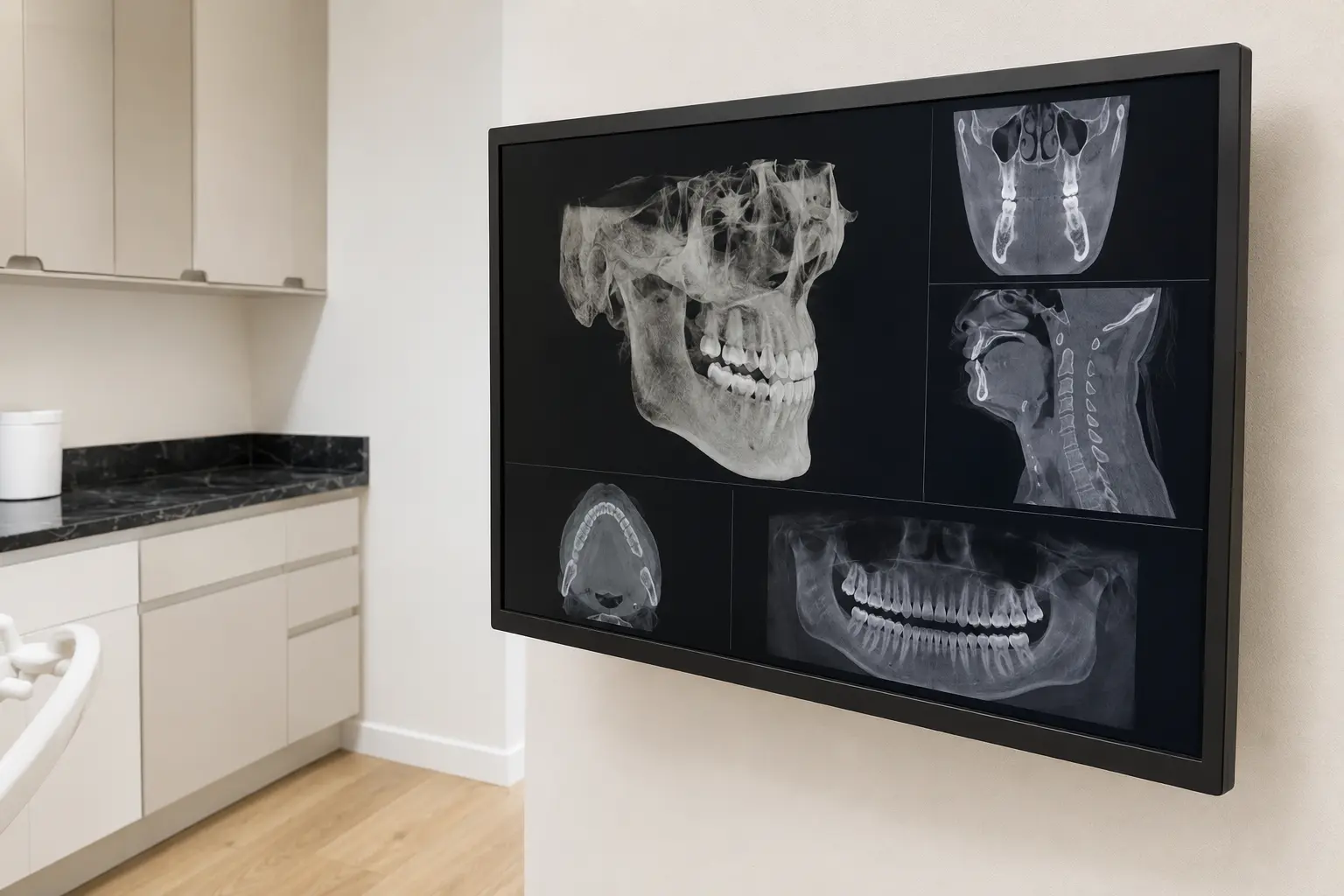
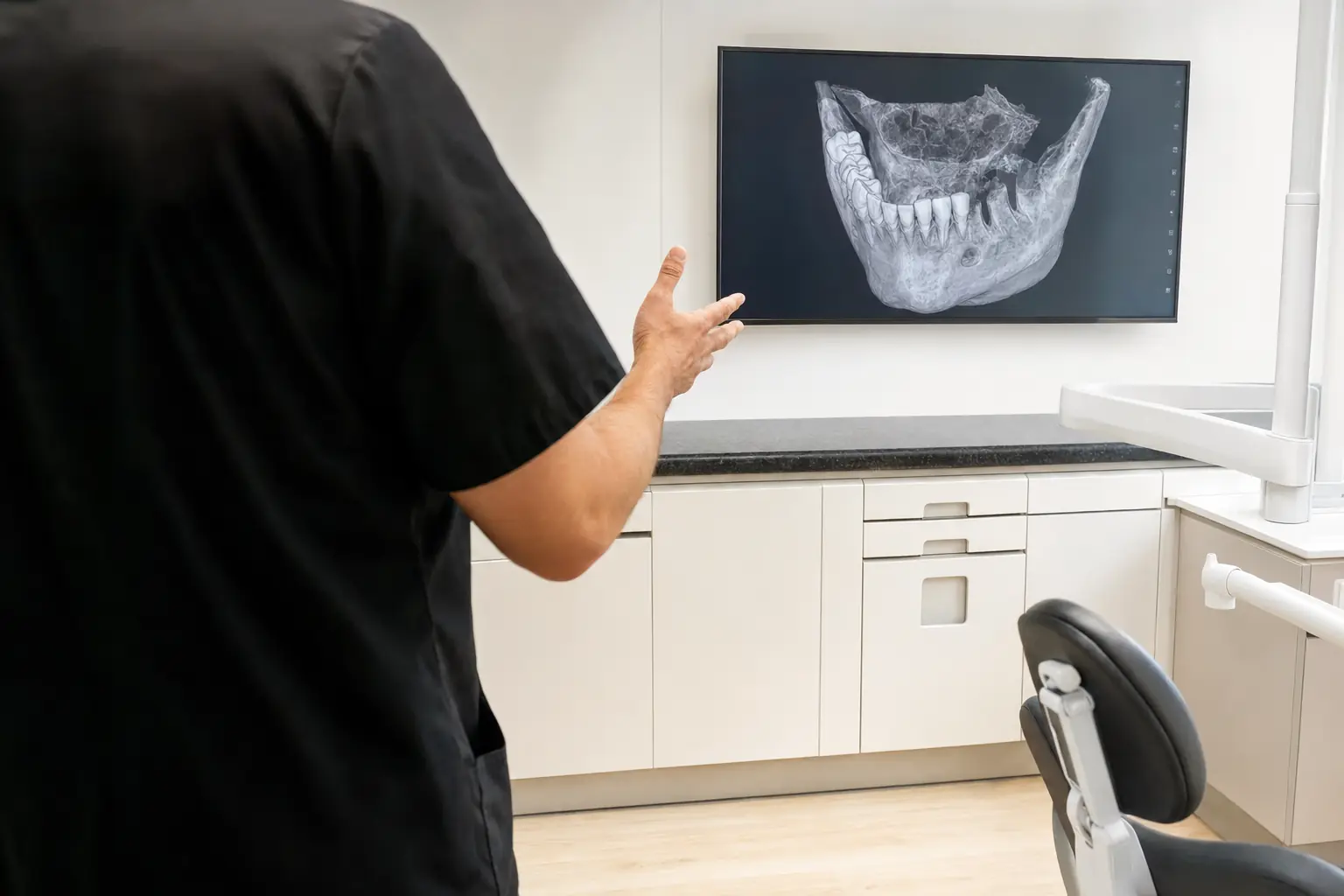
A full exam plus a 3D CBCT scan taken in our Georgetown office. The scan shows bone volume, density, and the position of nerves and sinuses — which is what determines whether an implant is possible and where exactly it goes. You'll see the images and get a written plan and cost before committing to anything.
Visit oneIf the failing tooth is still in place it is removed, often with a graft placed at the same time to preserve the socket. Where bone has already been lost, a graft is placed and given time to mature before the implant goes in. Not every case needs this step.
If required — adds 3–6 monthsThe titanium post is placed into the jawbone in a single appointment, guided by the CBCT plan. Most patients are comfortable with local anesthetic; nitrous oxide and oral sedation are available. Post-operative discomfort is usually mild and short-lived.
One appointmentThe bone grows onto and around the implant surface, locking it in place. This is biology, not dentistry — it can't be rushed. A temporary tooth can be worn during this period so you're not left with a visible gap.
Roughly 3–6 monthsOnce integration is confirmed, we attach the abutment and place the final custom crown, matched to the shade and shape of your surrounding teeth. From this point it is cleaned, flossed, and checked at routine visits like any other tooth.
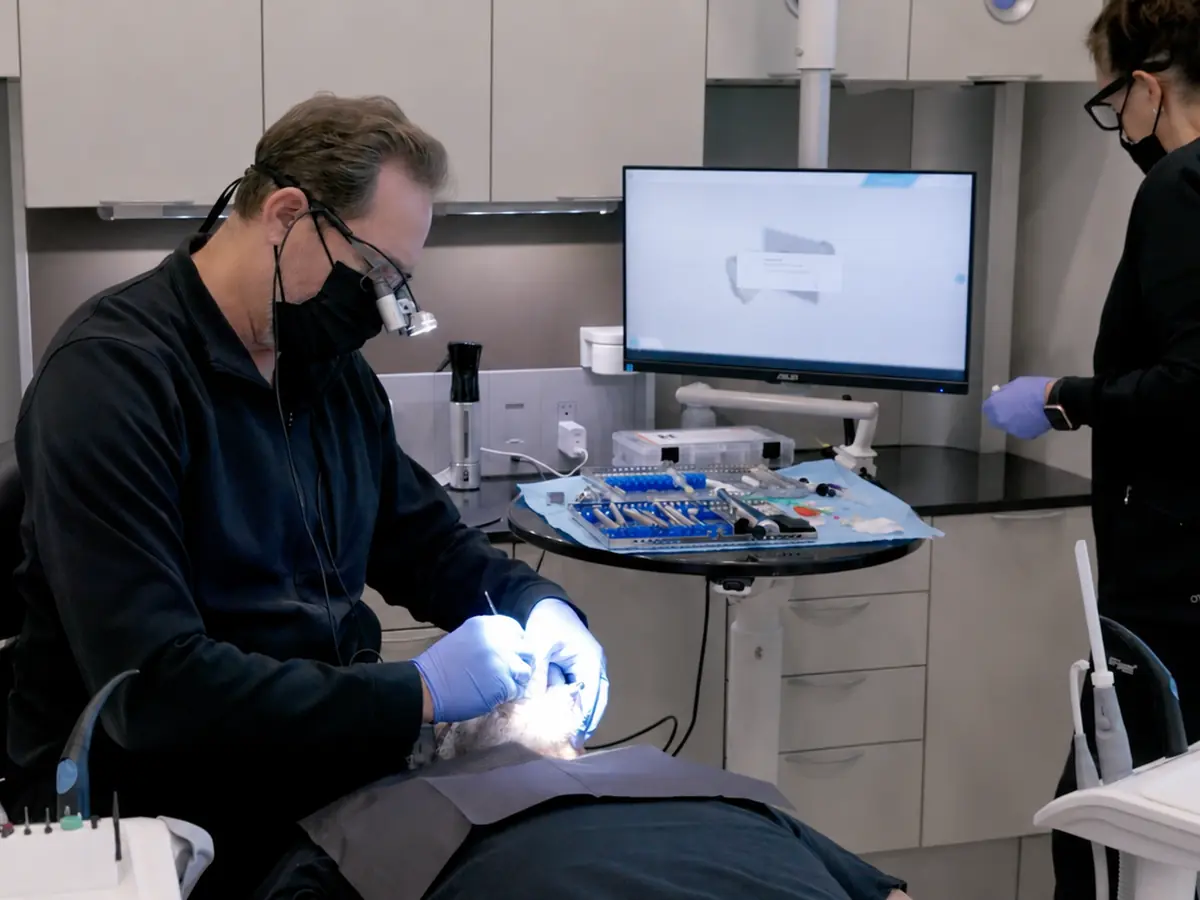
Final visitsInside the Georgetown office
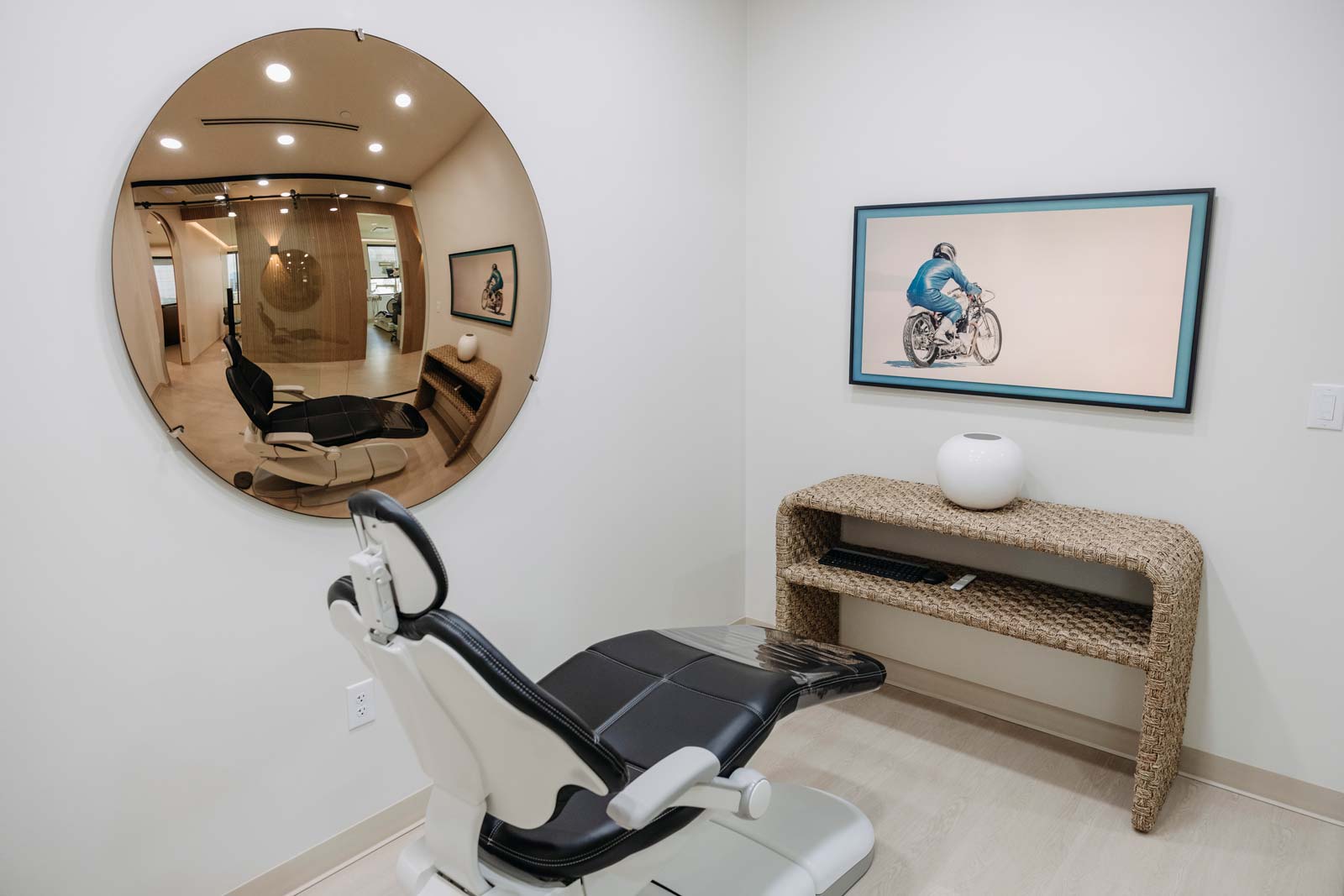
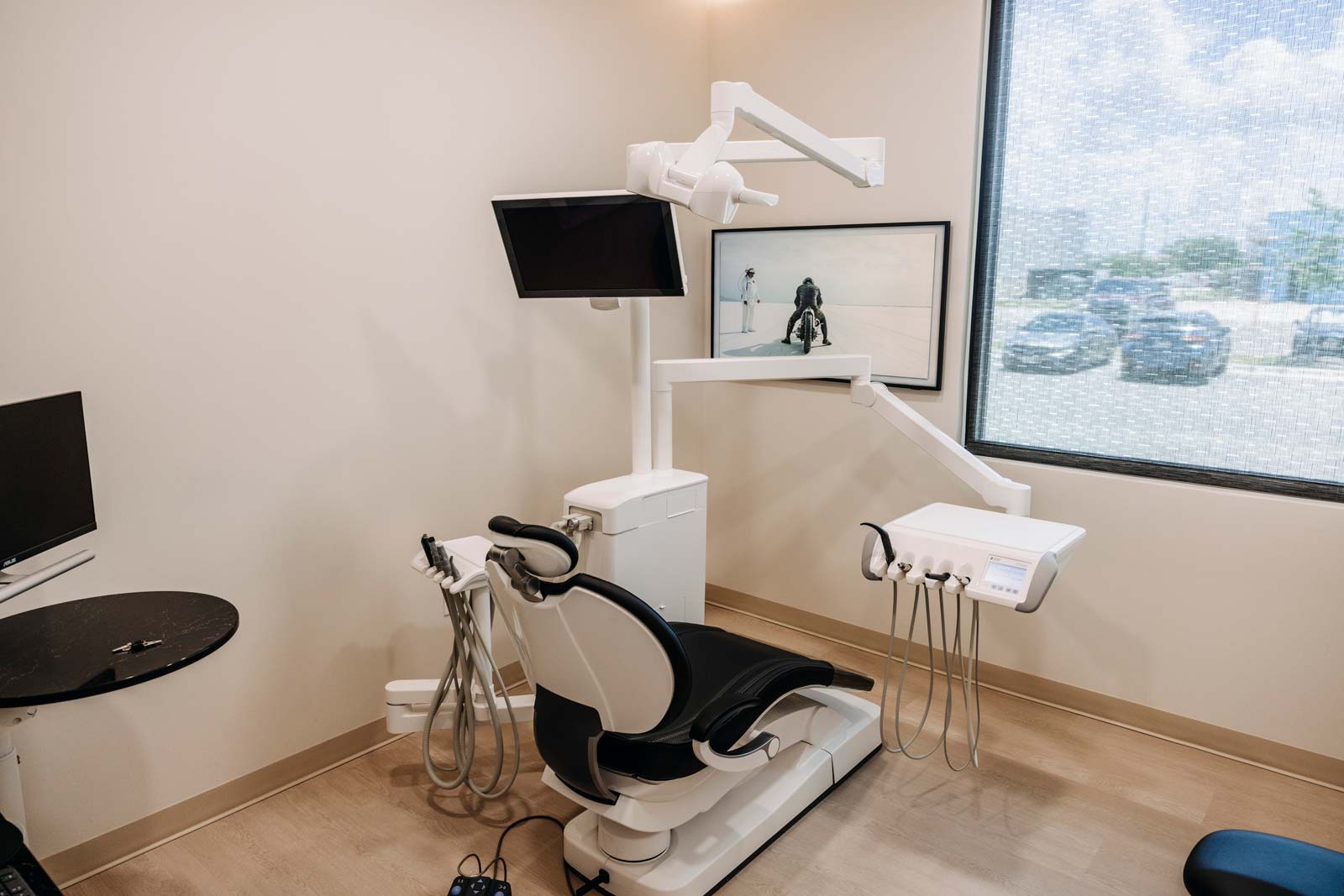
Implant planning is only as good as the imaging behind it. Ours is done in-house, at the same office where the implant is placed.
Cost and coverage
We don't publish a single implant price, because a number without a diagnosis behind it isn't useful to you. What we do is give you the full written cost after the consultation and imaging — before any treatment begins, with no obligation.
The variables that move the number are whether an extraction is needed, whether the site requires bone grafting or a sinus lift, how many implants are involved, and what kind of restoration goes on top. A single implant with adequate existing bone sits at one end of that range; a full-arch All-on-X case sits at the other.
Many dental plans now contribute toward implants, though almost all cap what they pay annually. We'll verify your specific benefits before you decide, and if treatment spans a year boundary there is sometimes an advantage to sequencing it accordingly.
Serving Williamson County
Our Georgetown office is about 2.8 miles from the Sun City Texas main gate, and a short drive from downtown Georgetown, Liberty Hill, Leander, Jarrell, and Round Rock. Implant treatment involves several visits over several months, and being close by matters more than patients expect at the outset. See our Sun City dentist page for directions and information specific to Sun City residents, or the Georgetown office page for the full range of services.
Office hours
Consultations are scheduled during regular office hours. Call (512) 713-1101 or book online, and let us know it's about implants so we can allow the extra time an imaging appointment needs.
| Monday | 7:00 AM – 6:00 PM |
|---|---|
| Tuesday | 7:00 AM – 6:00 PM |
| Wednesday | 7:00 AM – 6:00 PM |
| Thursday | 7:00 AM – 6:00 PM |
| Friday | Closed |
| Saturday | Closed |
| Sunday | Closed |
FAQ
Cost depends on whether an extraction, bone graft, or sinus lift is needed, how many implants are involved, and what restoration goes on top — so we provide a full written cost after your consultation and 3D imaging, before any treatment begins. We accept most major PPO plans, offer an in-house dental plan for uninsured patients, and offer CareCredit financing. Call (512) 713-1101 to schedule a consultation.
For a straightforward single-tooth case with adequate bone, expect roughly three to six months from placement to final crown — most of which is healing time while the bone integrates with the implant. If an extraction, bone graft, or sinus lift is needed first, add three to six months to that. A temporary tooth can be worn throughout so you are not left with a visible gap.
Dr. Hammons plans and places implants at our Georgetown office and restores them himself, so the same dentist handles your case from the consultation through the final crown. Planning is done on 3D CBCT imaging taken in-house. Cases that would be better served by a specialist are referred, and we will tell you that up front rather than partway through.
Implant placement itself is done under local anesthetic and most patients report it is more comfortable than they expected — often easier than the extraction that preceded it. Post-operative discomfort is typically mild, peaks in the first day or two, and is usually managed with over-the-counter pain relief. Nitrous oxide and oral sedation are available for patients who want them.
Age by itself is not a disqualifier, and we place implants regularly for patients in their seventies and eighties. What actually matters is bone volume and density at the site, gum health, whether smoking is a factor, and how well any systemic conditions such as diabetes are controlled. The consultation and 3D scan answer this question directly for your situation.
That is common, particularly where a tooth has been missing for years or a denture has been worn for a long time, because bone resorbs once the root is gone. Bone grafting and sinus lift procedures rebuild the site so an implant can be placed afterward. Bring any previous imaging with you — a fresh CBCT scan often shows more available bone than a standard two-dimensional x-ray suggests.
Yes. All-on-X uses four or more implants to support a fixed, non-removable full arch. It is the most common request we get from patients who have worn a lower denture that never stayed put. We also offer implant-retained overdentures, which snap onto implants but still come out for cleaning, as a lower-cost middle option.
The implant post itself is designed to be permanent, and long-term studies show high survival rates well past ten years when the implant is well maintained. The crown or bridge on top is a restoration and may need replacement over a lifetime, much like any other crown. The two things that most threaten an implant are smoking and untreated gum disease, so routine cleanings matter.
What Georgetown patients say
Consultations available
The consultation includes a full exam, a 3D CBCT scan, a look at your own imaging, and a written plan with costs — before you commit to anything. Book online or call the Georgetown office.




