

Dental Implants in North Austin & Georgetown, TX
The gold standard for tooth loss — titanium posts that fuse with your jawbone to support crowns, bridges, or dentures that look, feel, and function like real teeth. Placed by a dentist with deep implant and surgical training.
Need to be seen today? Call now — emergency time is reserved every day we’re open
Why implants outlast the alternatives
A dental implant acts as an artificial tooth root: once healed, it’s restored with a custom crown, bridge, or denture depending on how many teeth need replacement. Because the implant fuses with the bone, it delivers strength, stability, and durability traditional bridges and removable dentures can’t match.
Implants also protect what you can’t see: when a tooth is lost, the jawbone deteriorates from lack of stimulation. Implants stimulate bone growth, helping maintain your facial structure. With proper care they can last for decades — a cost-effective choice in the long run.
Dr. Hammons has spent countless hours mastering implants and oral surgery, including years treating U.S. service members — and advanced imaging and planning tools guide precise placement. For patients missing multiple teeth, implant-supported dentures anchor firmly without slippage, and implant-supported bridges spare healthy adjacent teeth from being modified as anchors.
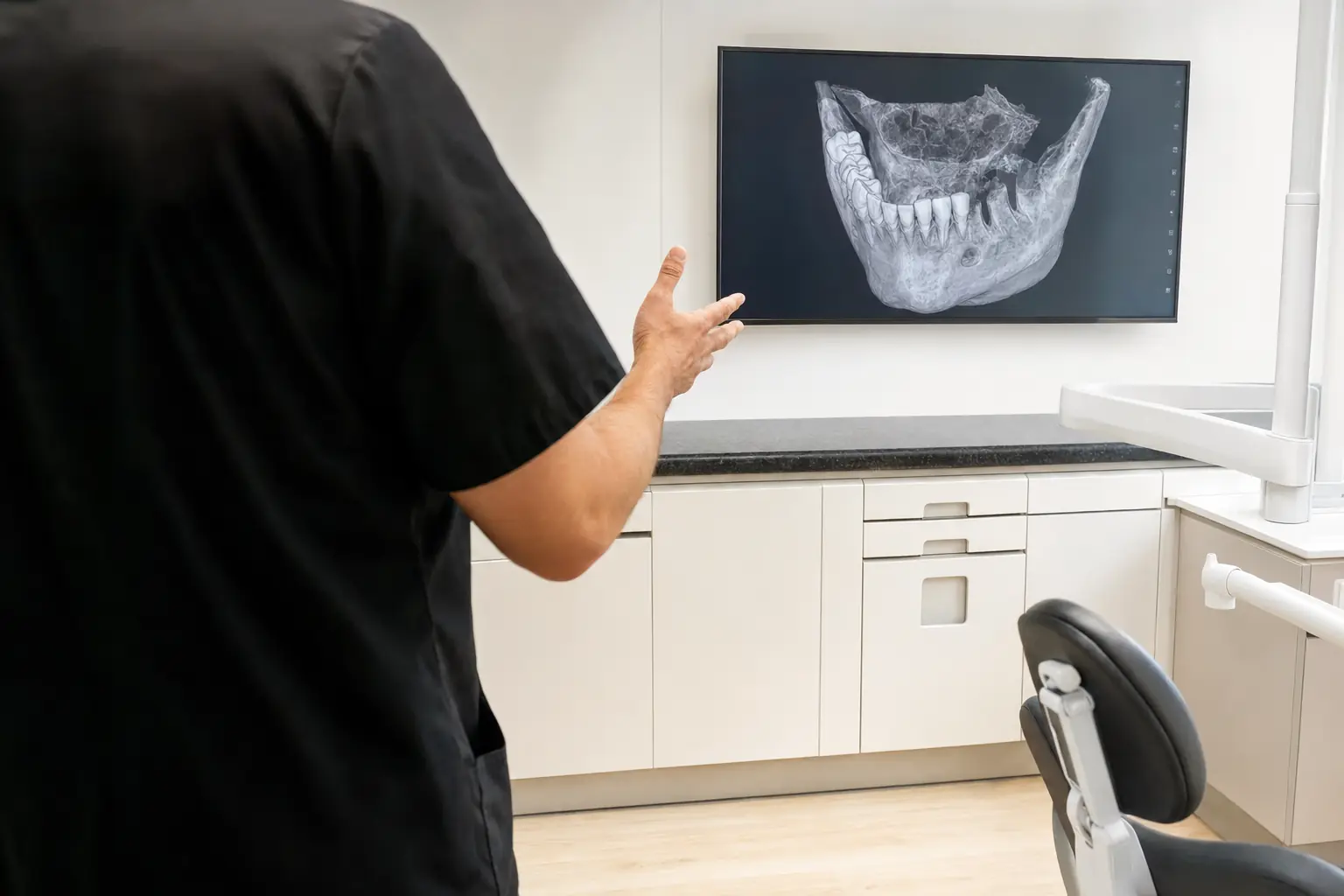
Five stages, fully guided
1 · Consult & Plan
Thorough exam with digital X-rays or 3D scans, plus honest discussion of goals, costs, and any preliminary work like bone grafting.
2 · Placement
The titanium post is placed into the jawbone under local anesthesia — with sedation options available for comfort.
3 · Osseointegration
Over the next few months the implant fuses with the bone; a temporary restoration can maintain aesthetics and function while you heal.
4–5 · Restore & Follow Up
An abutment connects the integrated implant to your custom crown, bridge, or denture — then healing and stability are monitored at routine checkups.
What implants require of you
A healthy starting point
Decay or gum disease gets treated first, and adequate jawbone density is needed to support the implant. If bone loss has occurred, grafting or sinus lifts can often rebuild a stable foundation — don’t lose hope before an evaluation.
Honest risk conversation
As with any surgery there are risks — infection, nerve damage, anesthesia complications — but they’re relatively rare with an experienced team and diligent aftercare. Everything is discussed openly at your consultation.
Simple maintenance
Implants don’t decay, but they need care: brush twice daily, floss (special floss or interdental brushes may help), keep routine checkups, and avoid ice-chewing and smoking, which jeopardize implant success.
“Tooth loss doesn’t have to limit your lifestyle or self-esteem. Implants offer a second chance at a fully functional, natural-looking smile.”Elevate Your Oral Health
Implant consultations in North Austin or Georgetown
Your implant journey is planned and followed in-house at both offices. Implants are an investment — our front office helps you navigate insurance benefits and payment plans to make treatment as accessible as possible.
Hammons Family Dental — North Austin
10740 Research Blvd., Ste. 125Austin, TX 78759(512) 795-9960
Mon–Thu 7:00am–6:00pm · Fri 8:00am–5:00pm
Book North AustinHammons Family Dental — Georgetown
1502 Blue Ridge Dr., Ste. 101Georgetown, TX 78626(512) 713-1101
Mon–Thu 7:00am–6:00pm · Closed Friday
Book GeorgetownQuestions patients ask about dental implants
What is a dental implant?
A small titanium post surgically placed into the jawbone as an artificial tooth root. After it fuses with the bone (osseointegration), it supports a custom crown, bridge, or denture — the closest alternative to regaining your original teeth.
How long do dental implants last?
With proper care — twice-daily brushing, flossing, routine checkups, and avoiding smoking and ice-chewing — implants can last for decades, making them cost-effective long term.
Am I a candidate for implants?
Ideal candidates have good oral health, adequate jawbone density, and overall well-being that supports healing. If you’ve lost bone, grafting or sinus lifts can often create the needed foundation — an evaluation tells you honestly where you stand.
Does getting an implant hurt?
Placement is done under local anesthesia, with sedation dentistry options for anxious patients. Most discomfort afterward is manageable, and healing is monitored closely through follow-up care.
What if I’m missing several teeth?
Implant-supported bridges replace multiple teeth without modifying healthy neighbors, and implant-supported (All-on-X) dentures anchor a full arch firmly — no slipping, far better comfort than traditional dentures.
Reclaim the freedom to eat, speak, and smile
Schedule an implant consultation and get a clear, honest plan from assessment to final restoration.
Book an Appointment